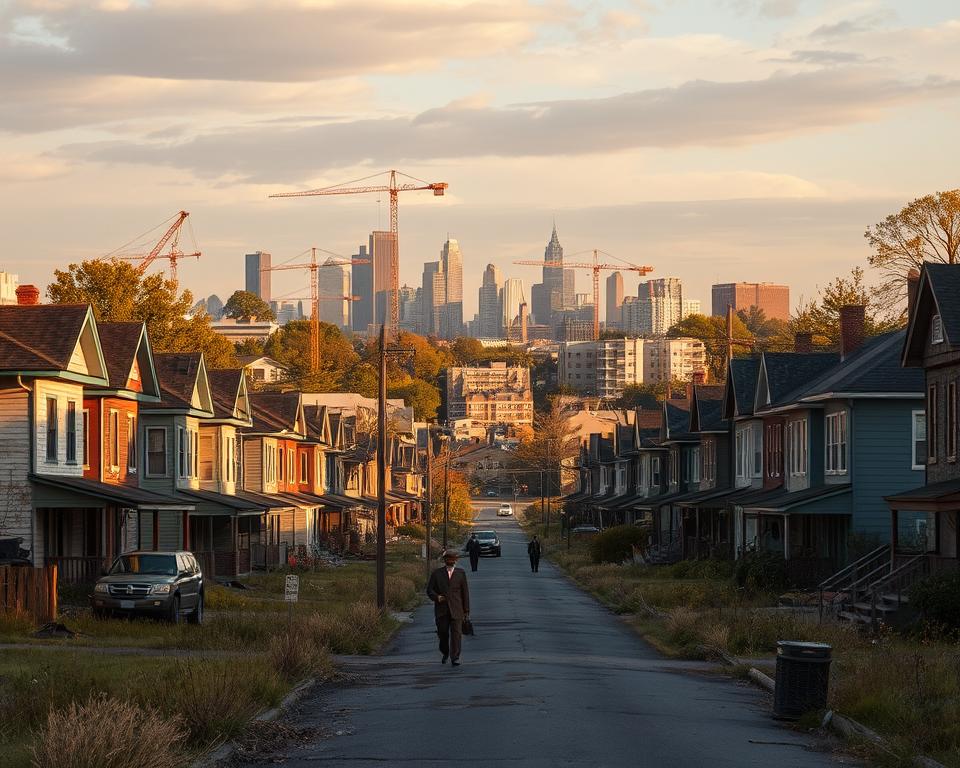
How Did Urban Renewal in Greensboro NC Destroy Black Neighborhoods in the 1960s
We often look at our city streets and wonder about the stories hidden beneath the pavement. In the 1960s, the United States saw a big change in federal policies. This change affected many communities, including Greensboro, NC, in a big way.
It’s important to look at how urban renewal projects affected minority areas. These projects destroyed thriving business and residential areas. By understanding these decisions, we can see how they changed our city and its people.
Key Takeaways:
- Federal policies in the 1960s caused significant displacement in minority communities.
- Local planning decisions prioritized development over the preservation of established neighborhoods.
- Understanding this history helps us recognize the lasting impact on our city’s social structure.
The Era of Urban Renewal in Greensboro NC
The landscape of Greensboro changed a lot in the mid-20th century. National housing policies came to our streets then. This time, urban renewal North Carolina saw, was about making cities modern, not keeping communities together.
Federal Policy and Local Implementation
The Housing Act of 1949 set the stage for these changes. It gave cities money and power to tear down “blighted” areas. Local officials used their own judgment to pick which neighborhoods to destroy.
They called old neighborhoods “blighted” to take their land. This let them knock down homes and businesses that had been there for years. These policies were not fair to everyone.
The Promise of Progress Versus the Reality of Removal
People were told that tearing down old buildings would bring better living spaces. They were promised modern, improved housing and new roads. But, this dream didn’t come true for many families.
Instead, they faced cramped or poor living conditions. Losing their homes meant losing their social and economic ties. Looking back, the harm done to people was much worse than any benefits from these projects.
Targeted Displacement of Black Communities
The change in Greensboro was not random. It was a series of actions aimed at certain communities. These projects chose commercial growth over keeping homes. This period of Black displacement Greensboro deeply affected the city’s social structure.
Identifying the Affected Neighborhoods
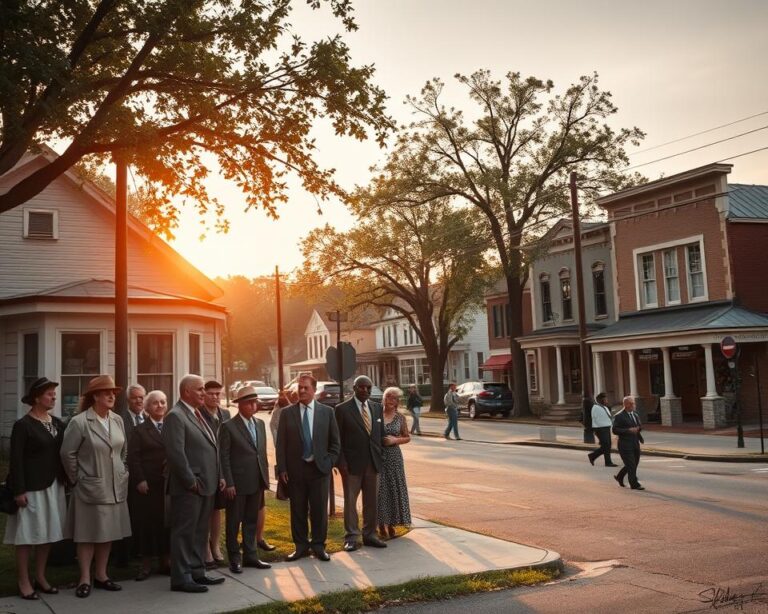
Many lively areas were hit hard by these policies. Warnersville, an old Black neighborhood, saw homes torn down for new projects. Other areas near downtown also faced pressure, making families leave their homes.
These places were more than houses; they were cultural and support centers. By removing them, the city erased years of history. Losing these landmarks made it tough for people to keep their social ties.
The Mechanics of Eminent Domain and Relocation
The city used eminent domain to take private land for public use. This law allowed them to take homes and businesses, often paying less than they were worth. Many families were left without a place to call home.
The move to new housing was chaotic and poorly managed. People were moved to public housing that was not as good as their old homes. This way of Black displacement Greensboro took away families’ control over their future homes.
The Loss of Homeownership and Generational Wealth
The worst part was losing family assets. For many, their home was their main source of generational wealth and security. When the city took these properties, it took away the equity families had built up over years.
This loss stopped many families from passing down property to their kids. Without this, the chance for economic growth was broken for many generations. We see the effects of this Black displacement Greensboro in the economic gaps in our city today.
The Economic and Social Cost of Redevelopment
The real cost of urban renewal was not just the destruction of buildings. It was the loss of jobs and the breaking of community ties. The 1960s redevelopment NC focused too much on changing the physical landscape. It ignored the economic systems that supported families for years.
Disruption of Local Business Districts
The destruction of lively business areas hurt local businesses a lot. Many Black-owned shops and offices were key to the local economy. When they were torn down, the community lost more than just buildings; it lost the financial independence these businesses provided.
This loss left a big gap that new developments rarely filled. Small business owners often couldn’t afford to move or get the support they needed. So, the economic life of these areas disappeared, leaving a trail of diminished opportunity for years.
Fragmentation of Social Networks and Community Ties
The effects of Black displacement Greensboro went deep into the city’s social structure. Neighborhoods were tight-knit, where neighbors helped each other out. But when people were forced to move, these networks broke apart, leaving many feeling alone in new places.
The loss of places like community centers and local churches also hurt these bonds. These spots were the heart of the neighborhood, giving people a sense of belonging. When these places were gone, the social glue that held the community together started to fade, causing lasting damage to the residents’ spirit.
Voices of Resistance and Community Advocacy
Courageous voices stood up for their communities in the 1960s redevelopment era in NC. People saw the destruction of their neighborhoods as more than just urban planning. It was an attack on their stability and heritage. Their fight is a key part of the quest for justice.
Grassroots Organizing Against Displacement
Neighborhood groups became the heart of the fight to save homes. They met in churches and community centers to plan. Collective action helped neighbors challenge the city’s idea of progress.
Many families refused to leave without a fight. They demanded fair compensation and better relocation options. They knew the 1960s redevelopment policies favored commercial interests over residents. Their organizing forced officials to see the human cost of these projects.
The Role of Local Leaders and Civil Rights Activists
The fight for housing justice tied into the Civil Rights Movement. Local leaders and students saw the displacement of Black families as inequality. They spoke out against discriminatory zoning and eminent domain.
Activists worked hard to connect policy makers with those affected. They organized protests and public hearings. Their efforts made sure the voices of the marginalized were heard in city hall. Their dedication showed that 1960s redevelopment NC faced public scrutiny and moral opposition.
We honor these individuals for their dedication to their neighbors. Their legacy shows the importance of community advocacy. Resilience and unity are key for fighting against institutional displacement.
Long-term Impacts on Greensboro Housing History
The legacy of urban renewal shapes our view of Greensboro’s housing history today. The decisions made in the 1960s were not just temporary fixes. They created a foundation that influences how our neighborhoods grow and interact.
We must acknowledge that these past actions have left a permanent mark on our community. By studying this history, we gain the insight needed to address modern challenges in urban development.
Shifting Demographics and Neighborhood Segregation
The displacement of families in the mid-20th century forced a massive shift in where people lived. Many residents were pushed out of their homes and into concentrated areas, solidifying segregation. This forced migration disrupted the social fabric that had held these communities together for generations.
Today, we see the results of these demographic shifts in our local census data. The separation of neighborhoods remains a significant hurdle for those of us working toward true integration. It is clear that the policies of the past created barriers that are difficult to dismantle without intentional effort.
The Lasting Scars on the Urban Landscape
Beyond the social impact, the physical landscape of our city reflects the scars of past redevelopment projects. Large infrastructure projects, such as highways, often cut through thriving districts. These physical barriers effectively isolated neighborhoods and limited access to essential resources for many residents.
These scars serve as a constant reminder of why we need more equitable planning in our future. As we continue to analyze Greensboro housing history, we realize that urban design is never neutral. We must prioritize inclusive growth to ensure that all citizens have the opportunity to thrive in a connected and supportive environment.
Reflecting on the Path Toward Equitable Growth
Looking into Greensboro’s housing history helps us see the city more clearly. We understand how choices made long ago affect our neighbors today. By learning from the past, we can fight for fairness in our city now.
We think true progress means facing how displacement changed our community. We aim to make a city where everyone feels important and safe at home. Join us in talking about making North Carolina’s spaces welcoming for all.
Creating a better future begins with learning from Greensboro’s past. Together, we can make sure new developments help everyone, not just some. Let’s work towards policies that bring justice and prosperity to our city.