What Is the History of the Greensboro Four and the Lunch Counter Sit In
We often look back at moments that changed America. One such moment was when young people stood up against inequality. Their student protests NC were a powerful call for change during a time of division.
The lunch counter protest history shows how a simple act sparked a national movement. This brave act became a key part of the civil rights movement Greensboro. It showed that nonviolent resistance could challenge deep-seated policies. It was a moment where quiet courage faced public injustice.
The Greensboro Four story teaches us that ordinary people can do extraordinary things together. By learning about the Greensboro Four, we appreciate the sacrifices made for equality. We invite you to see how these events shaped our nation today.
The Spark of Change: Understanding the Greensboro Four
The Greensboro Four story starts with a bold act of defiance in a North Carolina lunch counter. These young men are seen as symbols of courage and nonviolent resistance. They dared to challenge the status quo of their time.
Who Were the Four Students
The group was made up of four freshmen at North Carolina A&T State University. Ezell Blair Jr., David Richmond, Franklin McCain, and Joseph McNeil were just teenagers when they decided to take a stand.
They were ordinary students who were frustrated with unfair treatment. By looking at their lives, we appreciate the sacrifices they made for justice.
The Motivation Behind the Action
Their motivation came from a desire for equality and a commitment to nonviolent discipline. They were inspired by Mohandas Gandhi’s teachings. They believed peaceful protest was the best way to show systemic injustice.
The Greensboro Four planned their protest carefully to be orderly and impactful. Through their story, we see how a small group can start a movement that changes history.
The Atmosphere of 1960: Segregation in North Carolina
To grasp the bravery of the Greensboro Four, we must first understand the South in 1960. The social scene was a mix of strict laws and unwritten rules. These rules forced separation in public life.
Even after the 1954 Brown v. Board of Education ruling, equality was far from achieved. Many places, public and private, denied basic rights to Black people.
The Reality of Jim Crow Laws
The Jim Crow era set up a strict social order. Laws made sure Black people had to use separate areas for waiting, water, and eating. This made them seem less than others.
Even without laws, social norms kept segregation alive. This made systemic inequality a daily fact for North Carolina’s Black residents.
Student Life at North Carolina A&T
North Carolina A&T was a place of learning and community. Students talked about the world changing and their own limited futures.
This supportive setting gave students a strong sense of purpose. They saw student protests NC as a way to fight against daily injustices. Together, they turned their anger into a strong civil rights movement.
The Day of the Protest: February 1, 1960
The morning of February 1, 1960, was like any other in Greensboro. But it ended in a revolution. Four students from North Carolina A&T State University decided to act. They walked downtown to challenge segregation laws.
Arriving at the Woolworth Lunch Counter
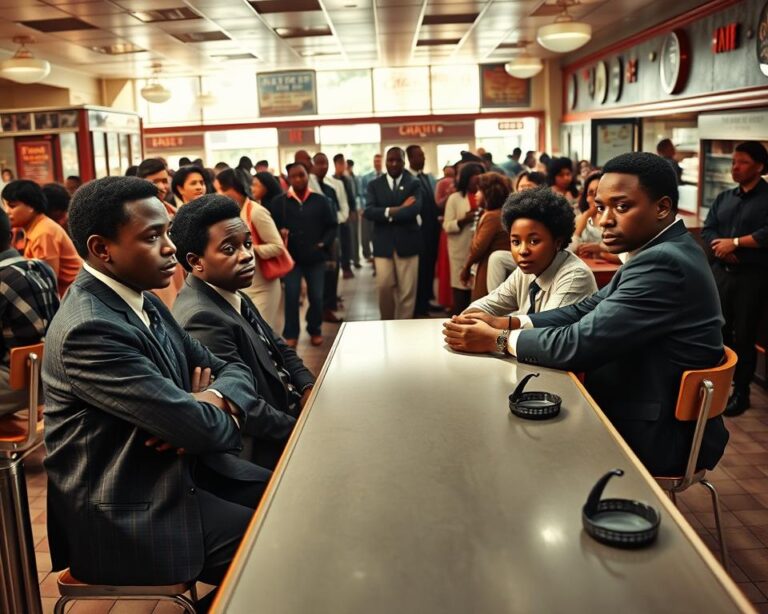
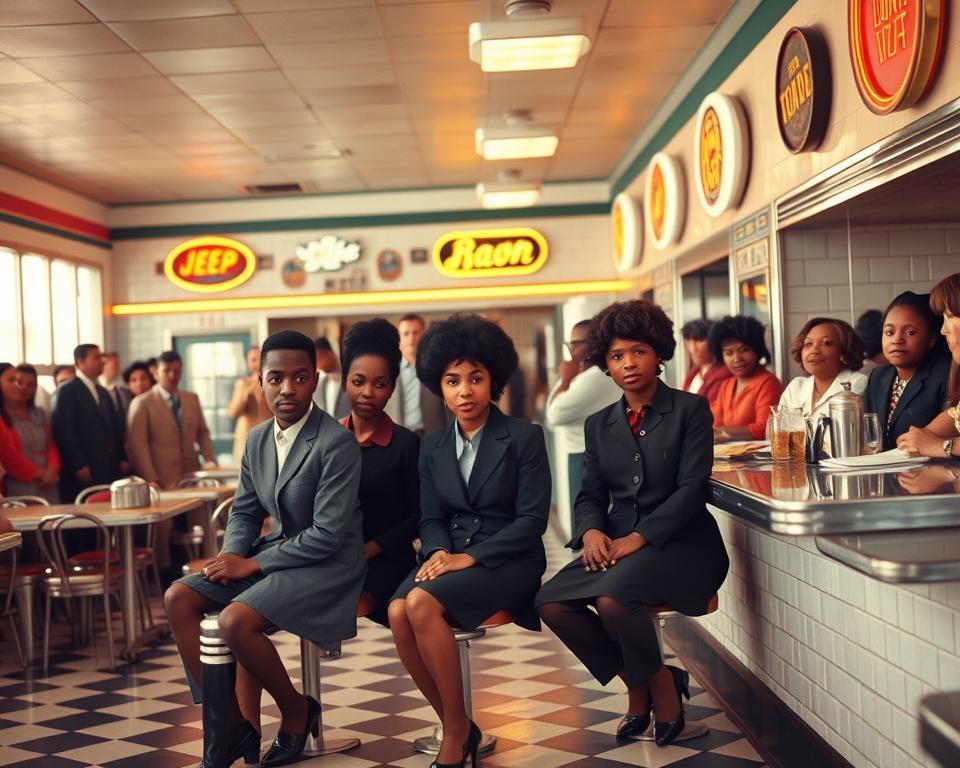
The students entered the F.W. Woolworth store on South Elm Street with determination. They went straight to the lunch counter. This moment is key in lunch counter protest history. It was the first time they sat where only whites were allowed.
The Initial Confrontation with Staff
The atmosphere changed when the students sat down. A waitress refused to take their orders because of their race. The store manager then asked them to leave.
The students stayed calm, despite the tension and stares. They politely asked for service, knowing they were challenging the status quo. The manager’s refusal showed the era’s deep inequality.
Maintaining Nonviolent Discipline
The students had studied nonviolent resistance. They knew staying calm was key to their mission. Even with verbal harassment, they didn’t get angry or violent.
Their calm and discipline were key to the protest’s success. By not fighting, they made segregation’s absurdity clear. This showed that nonviolent action can bring about change.
Escalation and Expansion: The Movement Spreads
What started as a quiet protest at a lunch counter grew into a powerful movement for equality. The first act of defiance caught the public’s eye, sparking a wave of activism. This moment became key in the civil rights movement Greensboro, showing that together, we can fight deep injustices.
Growing Numbers in Greensboro
Soon, four students became hundreds of dedicated people. They filled lunch counters, stopping businesses and making segregation hard to ignore. This showed the strength of student-led resistance against inequality.
Student Protests Across North Carolina
The energy from these local actions spread quickly. Student protests NC started in Durham, Winston-Salem, and Raleigh. It showed that young people across the state wanted change.
The movement grew, inspiring actions in the South. These student protests NC showed a way to fight Jim Crow laws peacefully.
The Formation of the Student Nonviolent Coordinating Committee
Activists created the Student Nonviolent Coordinating Committee, or SNCC. It quickly became a key player in the civil rights movement Greensboro and beyond. The SNCC gave youth a platform to keep pushing for change.
The Role of Media and Public Reaction
News coverage played a big role in making the lunch counter protest history a national topic. Journalists gave us a peek into the fight for equality. This made a small protest grow into a big movement.
How Local News Covered the Sit-Ins
At first, local newspapers in North Carolina had trouble covering the protests. They often highlighted the disruption instead of the students’ moral stand. But the protesters kept pushing, and soon, local media had to report on the growing tension.
These early reports were a critical record of the students’ daily battles. By sharing the names and actions of the protesters, local media helped the movement grow. People across the state started seeing the faces of those fighting against unfair rules.
National Attention and Public Sentiment
As the movement grew, TV brought the harsh reality of segregation into homes across the U.S. Seeing students face abuse while sitting peacefully changed public views. This was a key moment in our lunch counter protest history.
The national spotlight made Americans face the harsh truth of Jim Crow laws. Many who had ignored the issue before couldn’t look away anymore. This awareness helped build support for future civil rights laws and social change.
Legal and Social Consequences of the Sit-Ins
The students’ brave actions changed local laws and national policies. Their determination caused a big impact that went beyond the lunch counter. They made the nation talk about something it couldn’t ignore.
The Desegregation of Woolworth
The protests hurt the store’s business. As the sit-ins went on, the store lost a lot of money. This financial pressure made the owners rethink their rules.
After months of losing money, the lunch counter opened to everyone. This was a big win for the civil rights movement Greensboro. It showed that peaceful protests could break down old barriers.
Shifting Public Policy and Civil Rights Legislation
The success in North Carolina inspired others across the country. Local wins helped push for bigger legal changes. These efforts changed the national talk on equality and justice.
The students’ bravery helped shape the era’s public policies. Their fight for change led to key civil rights legislation. Their example shows how local actions can lead to big national changes.
The Lasting Legacy of the Greensboro Four
We look back at these events to see how ordinary people change history. The Greensboro Four showed us that quiet resolve can be very powerful. They fought for human dignity.
Their actions changed the social landscape of the United States. We see their bravery in how we view civic engagement today. The Smithsonian Institution keeps a piece of the original lunch counter to honor this moment.
This artifact is a permanent tribute to the Greensboro Four. It reminds us that progress needs constant vigilance and personal sacrifice. We find inspiration in their story as we face our own challenges today.
Their courage is a beacon for those seeking justice. We invite you to think about how these students changed our nation. Share your thoughts on how this history shapes your view of equality today.