How Did the Textile Mill Villages in Greensboro NC Shape the City’s Social History
The Piedmont region’s history is deeply tied to early manufacturing. The rise of textile mills Greensboro NC changed our local identity and led to fast growth. These factories were the economic backbone for many years.
It’s fascinating to think about how these buildings impacted thousands of lives. By looking into industrial Greensboro history, we find a story of community, hard work, and strength. These villages were the core of a growing community.
Learning about these beginnings helps us see the lasting impact of industrial Greensboro history. As we explore the history of textile mills Greensboro NC, we understand our shared past better. Let’s explore how these structures shaped our city today.
The Rise of Textile Mills Greensboro NC and the Birth of Mill Villages
The growth of textile mills in Greensboro, NC, was a big change. It moved people from farming to a new, industrial life.
The Industrial Transformation of the Piedmont
The Piedmont area changed a lot as investors saw its value for making things. It had water power and was close to cotton fields, perfect for big factories.
Local leaders wanted to grow the economy. Soon, big brick buildings became common, changing city skylines.
Establishing the Company Town Model
Owners built special communities, called mill villages in North Carolina, to support growth. By 1900, 92 percent of textile workers lived in company-owned homes.
These towns kept workers near the factories. This ensured production stayed on track without delays from long commutes or housing issues.
Infrastructure and Housing for the Workforce
Companies built basic homes, churches, and schools quickly. They were for families moving from farms.
The housing was practical but also helped owners control workers’ lives. Living in company-owned homes let management watch over employees closely.
The Paternalistic Relationship Between Owners and Workers
A special bond often formed between mill owners and workers. Owners offered benefits that seemed good at the time.
But, these benefits came with rules. If a worker didn’t follow them, they could lose their job and home in these mill villages North Carolina.
Daily Life and Community Dynamics in North Carolina Mill Towns
Living in mill villages North Carolina was like living in a world controlled by the factory. These towns were built to keep workers near the looms. This made the towns tight-knit but also limited.
The Rhythm of the Whistle: Work-Life Balance
The day started and ended with the factory whistle. This whistle told everyone when to work and when to rest. Textile worker life NC was strict, leaving little time for personal freedom.
Despite long hours, people found ways to enjoy themselves. Neighbors would talk and trade goods on front porches after work. This created a strong bond among workers.
Social Institutions Within the Village Gates
The company did more than just provide housing. It also built the main social places in the town. These places were meant to keep the workforce stable and ready to work.
The Role of Churches and Schools
By 1925, most kids in North Carolina’s mill schools were learning to read and prepare for jobs. Churches provided a vital social outlet, where people could worship and socialize.
Company Stores and Economic Dependency
These services were important, but they also made people dependent on the mill. Many mill towns NC had company stores where workers could buy things on credit. This often kept families in debt, making it hard for them to leave the mill.
This setup made it hard for workers to look for other jobs. Even when they tried to live normally, money problems were always there. Families had to be very strong and clever to survive in these towns.
Labor Movements and the Struggle for Worker Rights
Under the surface of the mill village, a strong movement for worker rights started. Companies offered housing and social clubs, but many saw these as ways to keep them in line. The reality of textile worker life NC was a mix of gratitude for jobs and a growing wish for fair treatment.
Tensions Between Management and Labor
Management used activities like sewing clubs and baseball to build loyalty. They hoped these efforts would keep workers focused and loyal. But workers saw these as ways to control their lives and stop them from thinking for themselves.
This made workers quietly resist. They began to value their time and community more than the mill owners’ rules. This change was key in the early 20th century for textile worker life NC.
The Impact of the 1929 Loray Mill Strike and Local Unrest
The 1929 Loray Mill strike in Gastonia shook the state. It showed the deep anger over low pay and dangerous work. This event made workers in the Piedmont region think about their own situations.
Organizing Efforts in Greensboro
In Greensboro, the labor movement started to grow in mills. Workers secretly met to talk about their rights and bargaining together. These organizing efforts were dangerous, as bosses threatened to fire anyone linked to unions.
The Long-Term Consequences for Social Solidarity
Despite the dangers, these fights for rights changed the employer-employee relationship. Workers learned the strength of speaking together. This legacy of social solidarity shaped North Carolina’s labor scene for decades.
The Decline of the Mill Village Era and Urban Transformation
In the mid-twentieth century, Greensboro underwent a major change. The need for textile production decreased, leading to a shift in our economy. This period is a key part of industrial Greensboro history, marking the end of a long era.
Economic Shifts and the Closing of the Mills
Global competition and new technologies made many local mills unsustainable. The Glencoe mill, for example, shut down in the 1950s. Today, its building stands as a reminder of our past.
The closures were more than just business decisions. They changed how we lived and worked. Families had to find new jobs outside the mills. This was a tough time for our community.
Transitioning from Industrial Hub to Modern City
Greensboro adapted by growing its economy in new ways. We focused on education, healthcare, and logistics. This helped us become a lively, modern city that respects its history.
Preserving the Architectural Legacy
We keep our history alive through adaptive reuse projects. Old mills now house trendy lofts, offices, and community spaces. This way, we keep our neighborhoods’ unique charm while adding modern comforts.
The Changing Demographics of Former Mill Neighborhoods
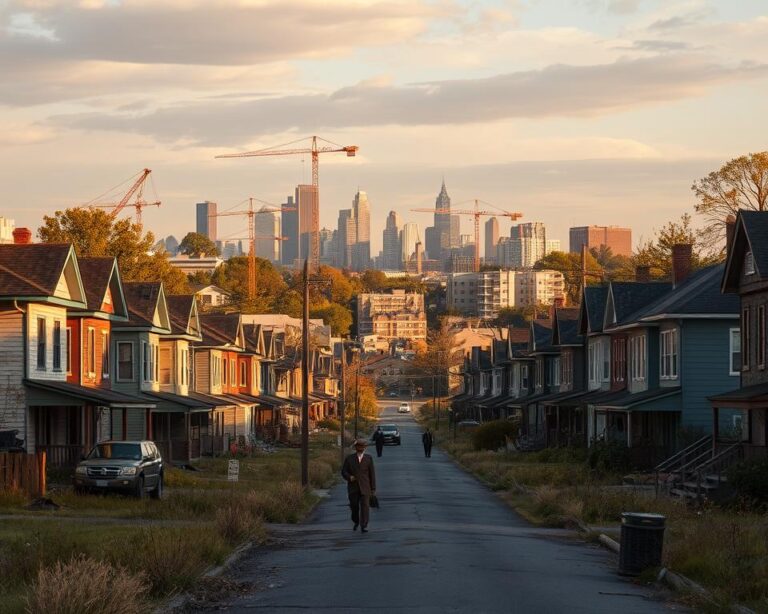
The social makeup of these areas has changed a lot. What was once a mill worker’s home now welcomes young professionals, artists, and families. This new mix brings energy to the streets that once echoed with factory whistles.
Today, these neighborhoods connect our past with our future. We celebrate our community’s resilience as we face the challenges of today. Our efforts to preserve these places ensure our city’s story stays vibrant and inclusive.
Reflecting on the Enduring Social Legacy of Greensboro’s Industrial Past
The history of our city is deeply connected to the hard work of those in mill towns NC. These areas helped shape Greensboro’s identity, which we can see today. Local churches and strong community bonds are just a few signs of this legacy.
Workers built their own churches to find solace away from the factory. These spaces showed their strength against tough corporate rules. By exploring mill towns NC, we learn to appreciate the people who created our world today.
Take a closer look at your neighborhood. Does it hold secrets from the textile era? Share your family’s stories or photos with us. We celebrate our industrial past by keeping these memories alive in our community.